
When I first started playing Commander, mono-white seemed pretty straightforward. Play some creatures, gain some life, throw in a few Angels, and hope for the best.
But white can do a lot more than that.
It’s one of the best colors for removing threats and protecting your board, and it has plenty of ways to build up an army of creatures. White has also gotten much better at things like card draw and keeping up with faster decks.
So if you’re building a mono-white Commander deck and have a few empty slots left, these are ten cards worth taking a look at.

There aren’t many situations where having Swords to Plowshares in your hand is a bad thing.
For one white mana, you can exile a creature. The downside is that its controller gains life equal to that creature’s power.
In Commander, that’s not usually something to be concerned with.
If someone drops a creature that’s about to take over the game, giving them a little extra life is a pretty good trade for getting that creature off the battlefield.
It’s cheap, easy to leave mana open for, and gets rid of the problem instead of sending it to the graveyard where it might come back later.
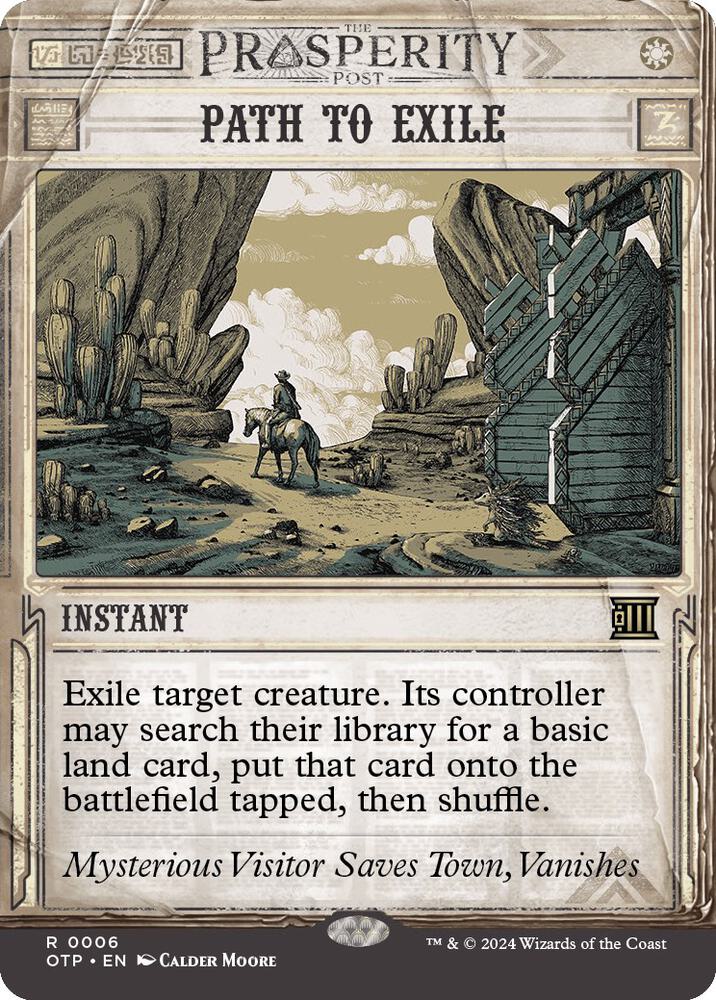
Path to Exile does almost the same job as Swords to Plowshares.
For one mana, you exile a creature. This time, instead of gaining life, that player can search for a basic land and put it onto the battlefield tapped.
Giving another player extra mana isn’t ideal, so I usually prefer Swords if I have to choose between the two.
But Commander decks have plenty of creatures that you simply can’t afford to leave on the battlefield. When one of those shows up, giving somebody an extra basic land doesn’t seem nearly as important.
Running both also gives you two cheap answers that are easy to hold onto until you really need them.
Erode may be another worth slotting in #2.

Swords and Path are great when a creature is causing problems.
Generous Gift is for pretty much everything else.
For three mana, you can destroy any permanent. The player gets a 3/3 Elephant token in return, but most of the time that’s a pretty good deal.
You can even destroy a land if there’s one causing serious problems.
A random 3/3 Elephant usually isn’t nearly as scary as whatever you just got rid of.
If you’ve played much Commander, you’ve probably heard someone ask:
“Are you going to pay the one?”
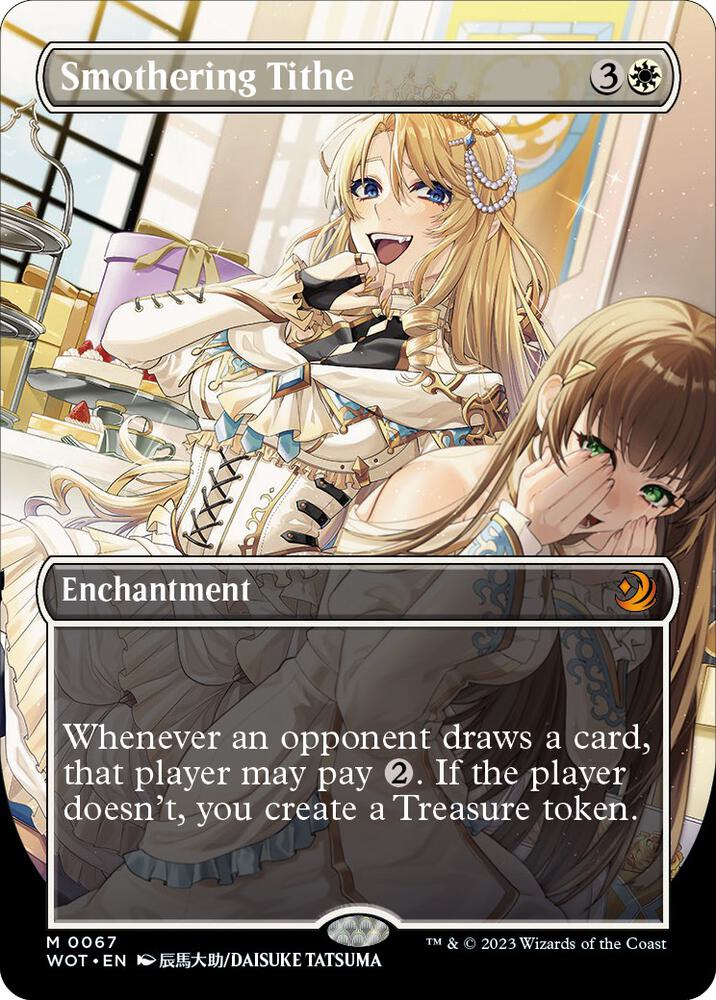
Smothering Tithe is whites equivalent of Rhystic Study. While it’s may not be a cheap card, it can certainly give you the advantage.
Whenever an opponent draws a card, they either pay two mana or you get a Treasure.
Now think about that in a four-player game.
Even if nobody plays an extra card-draw spell, your three opponents are naturally drawing cards every turn. Most players aren’t going to keep paying two mana every time they draw, so those Treasures can pile up surprisingly fast.
It can get even crazier when someone plays a spell that makes everybody draw several cards.
White doesn’t have the same land ramp that green does, but Smothering Tithe gives you another way to build up a huge amount of mana.

Esper Sentinel is one of those cards that doesn’t look very intimidating when you first put it onto the battlefield.
It’s a little 1/1 for one mana.
Then your opponents start casting spells.
Whenever an opponent casts their first noncreature spell each turn, you get to draw a card unless they pay mana equal to Esper Sentinel’s power.
Sometimes they’ll pay. Most of the time somebody eventually won’t.
Since you have multiple opponents, Esper Sentinel can potentially draw cards on several turns before it even gets back around to you.
If your deck can increase its power with +1/+1 counters, Equipment, or other effects, it gets even more annoying for your opponents.
6. Land Tax
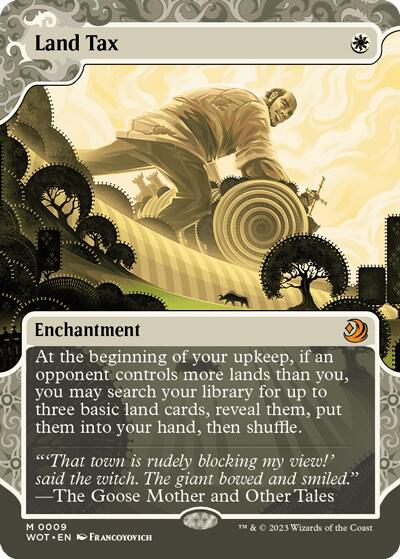
Land Tax is a little different from most ramp cards because it doesn’t actually put extra lands onto the battlefield.
Instead, it helps make sure you don’t miss your land drops.
At the beginning of your upkeep, if another player controls more lands than you, you can search your library for up to three basic lands and put them into your hand.
Three lands is a lot.
You still have to play them normally, but now you know you’re going to have lands available for the next few turns instead of sitting there hoping you draw one.
And let’s face it, somebody at a Commander table is probably going to start ramping.
If they’re going to have more lands than you anyway, you might as well get something out of it.
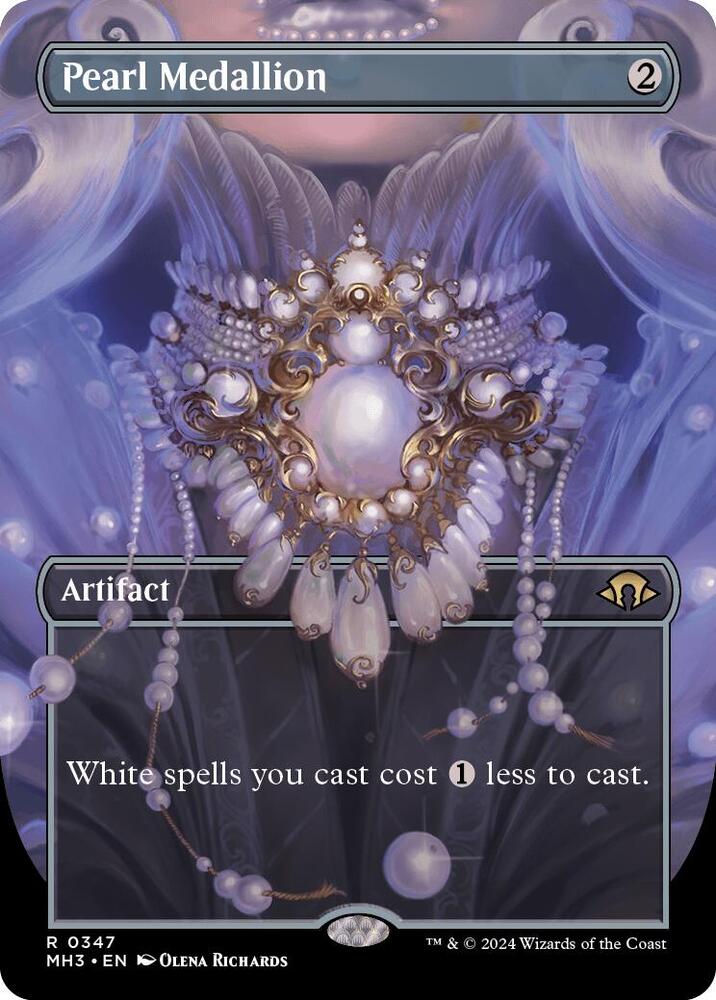
Pearl Medallion is about as simple as it gets.
Your white spells cost one less to cast. That’s it.
But saving one mana over and over throughout a game can add up quickly. Especially if you play Angels which are typically 4+ mana.
Maybe that five-mana spell now costs four. Then your three-mana spell costs two. Suddenly you’re able to cast two spells in the same turn when you normally would have only been able to cast one.
You aren’t technically creating more mana, but you’re making the mana you already have go further.
And because we’re talking about mono-white decks, there’s a good chance it’s going to work with a large portion of your deck.

We’ve probably all had this happen.
You spend several turns getting your board exactly where you want it. Your commander is out, your creatures are doing their thing, and everything is finally coming together.
Then somebody wipes the board.
Teferi’s Protection gives you a way out.
Your permanents phase out, your life total can’t change, and you gain protection from everything until your next turn.
Your cards basically disappear for a while and come back when it’s safe.
It can save your entire board from a wipe, protect you from a massive attack, or ruin someone’s plan to finish you off.
If you’re playing against white and they suspiciously leave three mana open, there’s a reason everyone starts wondering what they have in their hand.
Clever Concealment, or Perch Protection are also cheaper alternatives to Teferis Protection.
Sometimes one removal spell isn’t going to fix the problem.
That’s when it’s time to wipe the board.
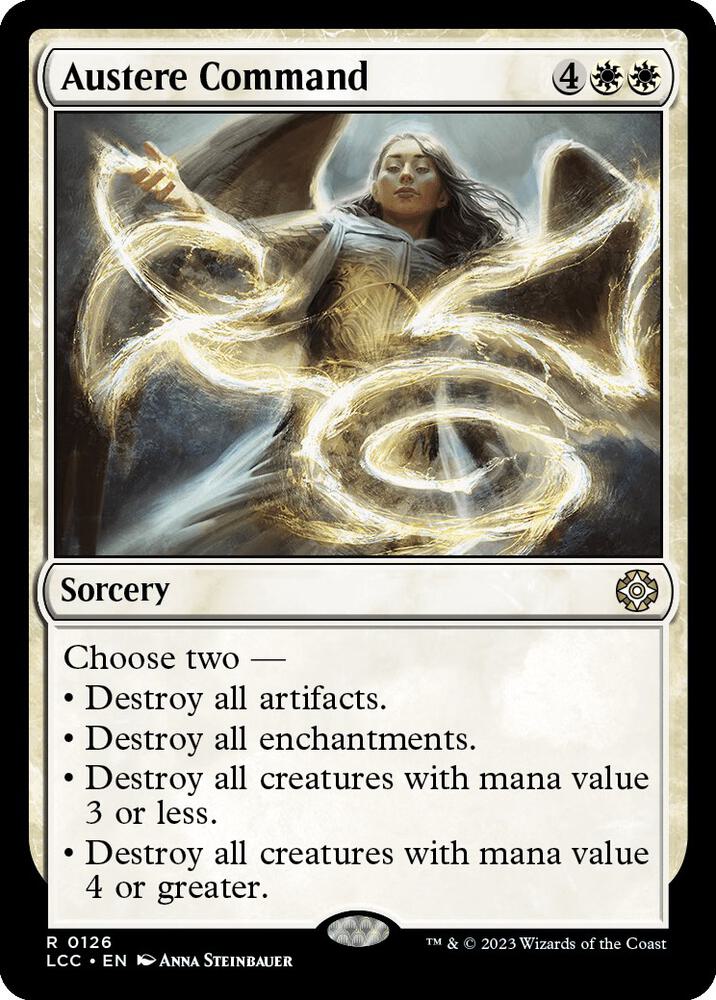
What I like about Austere Command is that you have some control over what gets destroyed. You choose two options, letting you go after artifacts, enchantments, smaller creatures, larger creatures, or a combination of them.
That gives you a chance to hurt your opponents without completely destroying your own board.
If you’re playing a bunch of smaller creatures and somebody else has several huge threats, wipe out the big creatures.
If artifacts and enchantments are taking over the table, deal with those instead.
Board wipes aren’t usually subtle, but Austere Command at least lets you be a little more selective about the destruction.
Farewell is another option though it exiles instead of destroy.
10. Sun Titan
Things are going to die in Commander. That’s just part of the game.
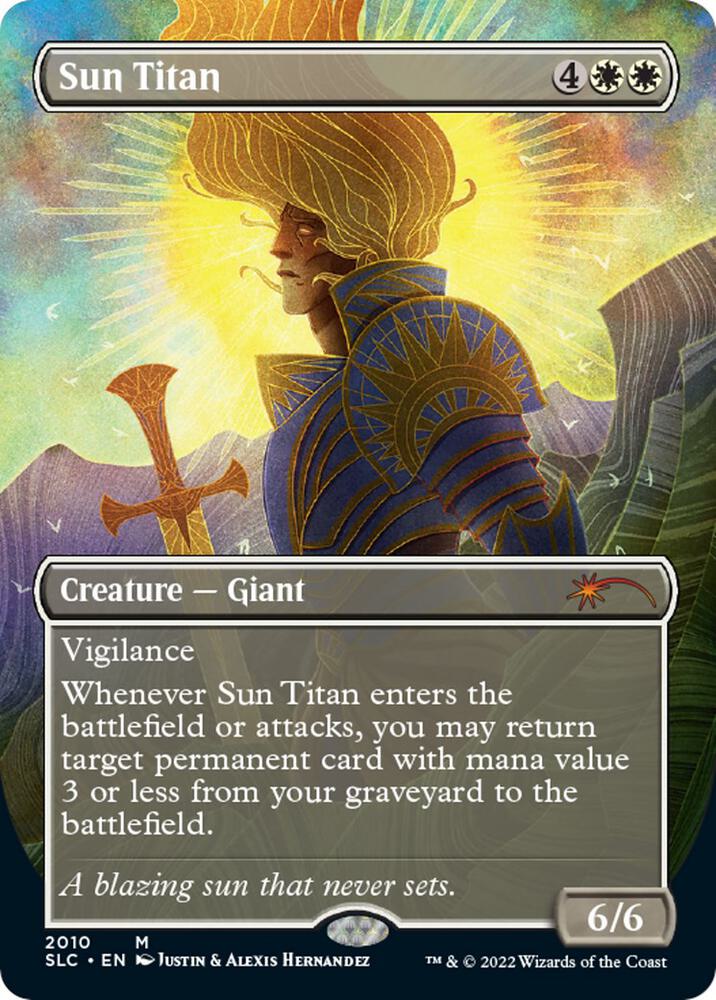
Sun Titan gives you a way to start getting some of those cards back.
Whenever it enters the battlefield or attacks, you can return a permanent with mana value three or less from your graveyard directly to the battlefield.
And “permanent” gives you quite a few options. It could be a creature that died earlier. It could be an artifact or enchantment someone destroyed. You can even bring back a land.
The best part is that Sun Titan doesn’t just do this once. As long as you can keep attacking with it, you can keep pulling useful cards out of your graveyard.
If your deck has a lot of important permanents that cost three mana or less, Sun Titan can get a ton of value.
Do You Need All 10? Of course not.
If your deck already has plenty of card draw, maybe you don’t need Esper Sentinel. If you don’t have many cheap permanents worth bringing back, Sun Titan might not do much for you. If your deck doesn’t struggle with mana, adding another ramp card just because it’s popular isn’t necessarily going to make the deck better.
These cards have proven useful across a lot of different decks, but that doesn’t mean you should automatically throw every one of them into yours.
Figure out what your deck is trying to do, see where it’s struggling, and then use cards like these to fill in the gaps. After all, you’ve only got 99 slots.
Make them count.



Leave a Reply