
Black has a pretty simple philosophy in Magic: if you’re willing to pay the price, you can probably get what you want. It specializes in creature sacrifice and lifeloss. But don’t let this deter you. In a game of Commander that starts with 40 life points, you can take advantage of not only your board state, but other players’ board states too, to gain an advantage and ultimately win the game.
That makes black one of the most flexible colors in Commander. It has great removal, some of the best tutors in the game, plenty of card draw, and more ways to use the graveyard than your opponents would probably like.
Of course, that doesn’t mean every black deck needs the exact same cards. But if you’re building mono-black and have a few slots to fill, these ten are a good place to start.
1. Demonic Tutor
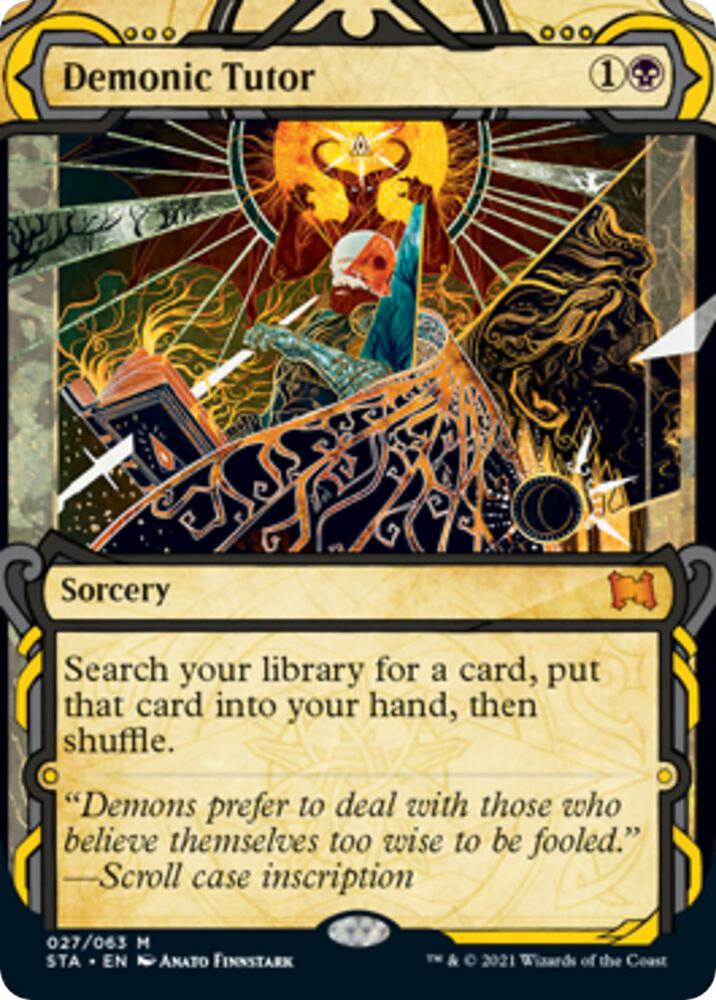
Sometimes you don’t need to draw more cards. You need one particular card.
That’s where Demonic Tutor comes in. For two mana, you search your library for any card and put it into your hand. No restrictions. No revealing it. Just go find whatever you need.
Maybe you’re missing a land. Maybe you need a board wipe before things get out of control. Maybe you’re one card away from getting your deck’s main engine running.
Demonic Tutor can be any of those things.
It’s about as straightforward as tutors get, and that’s exactly why it’s been a black staple for so long.
2. Dark Ritual
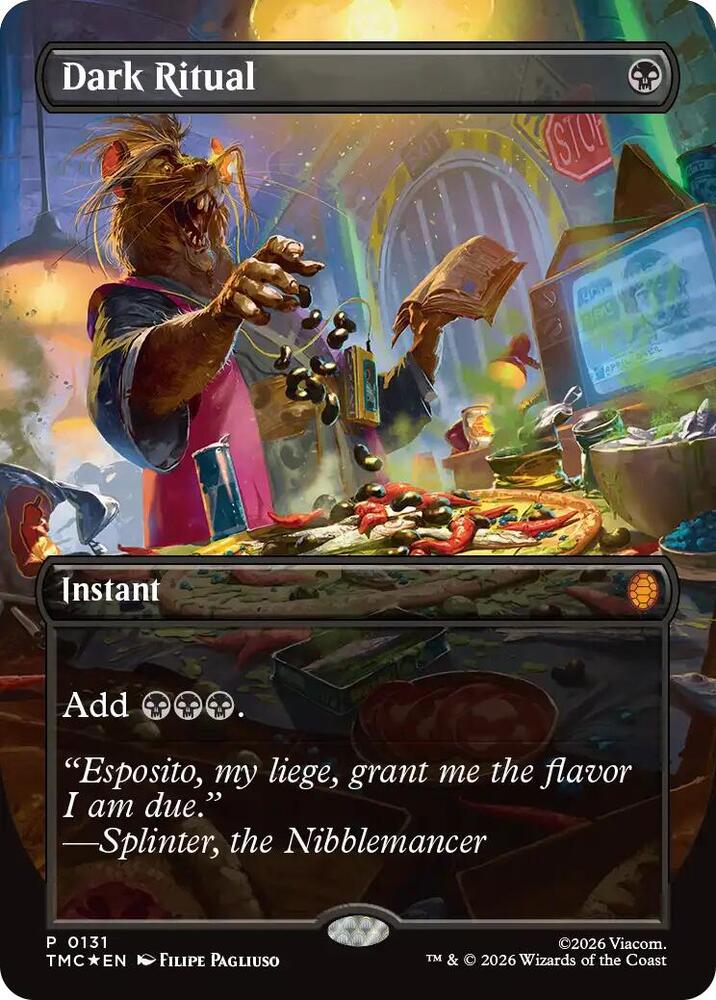
Three black mana for the price of one sounds like a pretty good deal.
Dark Ritual gives you a quick burst of mana, letting you make plays much earlier than you normally could. On the first turn, that can mean dropping a three-mana spell before most players have done much of anything.
Later in the game, it can provide that little extra push you need to cast multiple spells in one turn.
There is a catch, though. Dark Ritual doesn’t permanently ramp you. Once you’ve spent that extra mana, it’s gone.
So while it isn’t necessarily something I’d put in every mono-black deck, it’s definitely worth considering if your deck benefits from explosive turns.
3. Cabal Coffers

If you’re playing a lot of Swamps, Cabal Coffers can produce a ridiculous amount of mana.
You pay two mana and tap it to add one black mana for each Swamp you control.
Early in the game, that’s nothing special. Later on, when you have six, eight, or ten Swamps sitting around, things start getting interesting.
And yes, Cabal Coffers gets even better when you pair it with Urborg, Tomb of Yawgmoth, which makes every land a Swamp in addition to its other types.
Mono-black has plenty of expensive spells and mana-hungry abilities. Coffers gives you a way to actually pay for all of them.
4. Phyrexian Arena
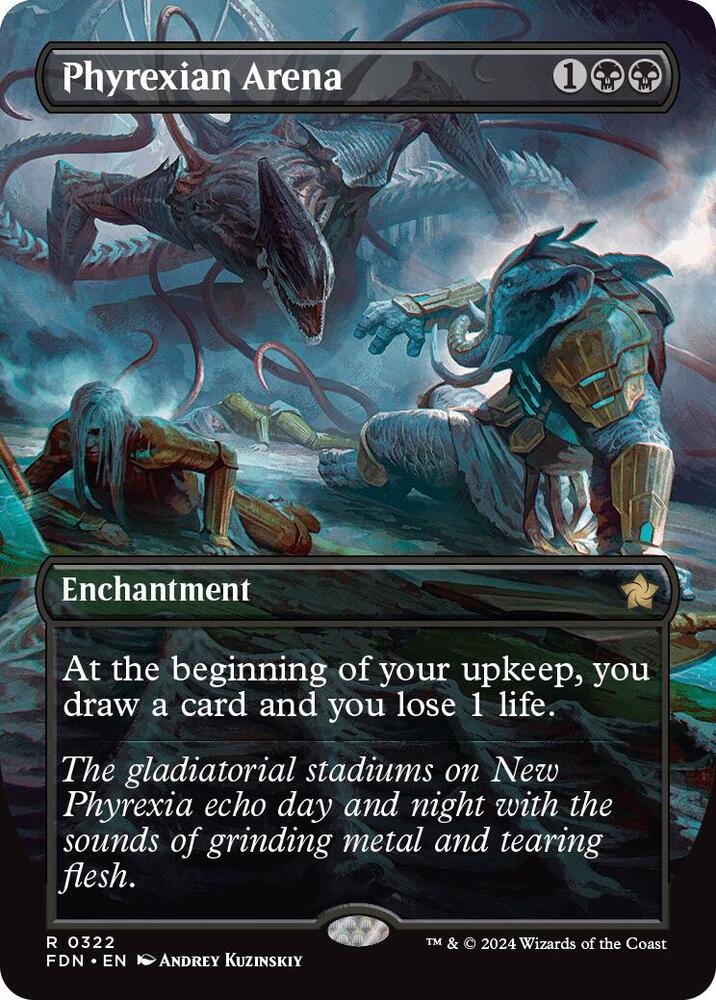
Black doesn’t mind trading life for cards, and Phyrexian Arena is one of the classic examples.
At the beginning of your upkeep, you draw an additional card and lose one life. That’s it.
One life may sound like a downside, but Commander starts you at 40. Trading a small amount of that life for an extra card every turn can be well worth it, especially if Arena sticks around for several turns.
It isn’t going to dump half your deck into your hand at once. It just quietly keeps the cards coming.
Sometimes that’s all you need.
5. Necropotence
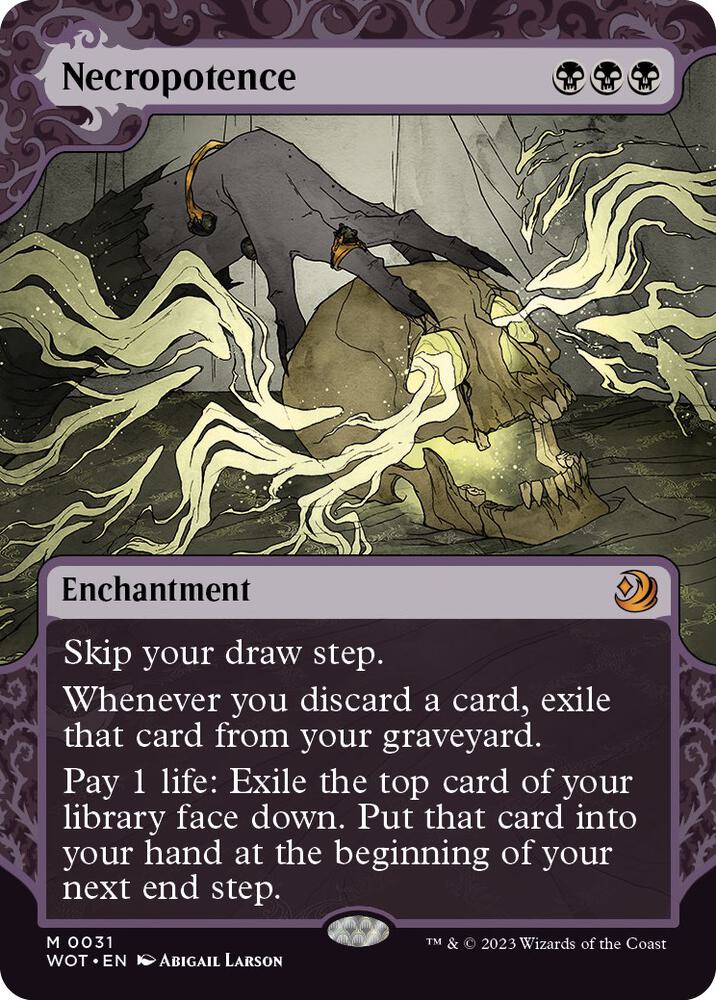
If Phyrexian Arena is the reasonable way to trade life for cards, Necropotence is what happens when you stop being reasonable.
For one life, you can exile the top card of your library face down and put it into your hand at the beginning of your next end step.
Necropotence does come with some unusual restrictions, including skipping your draw step and exiling cards you discard, so it’s worth reading the whole card before throwing it into a deck.
But once you learn how to use it, it can refill your hand incredibly quickly.
Just keep an eye on that life total. Forty can disappear faster than you think.
6. Feed the Swarm
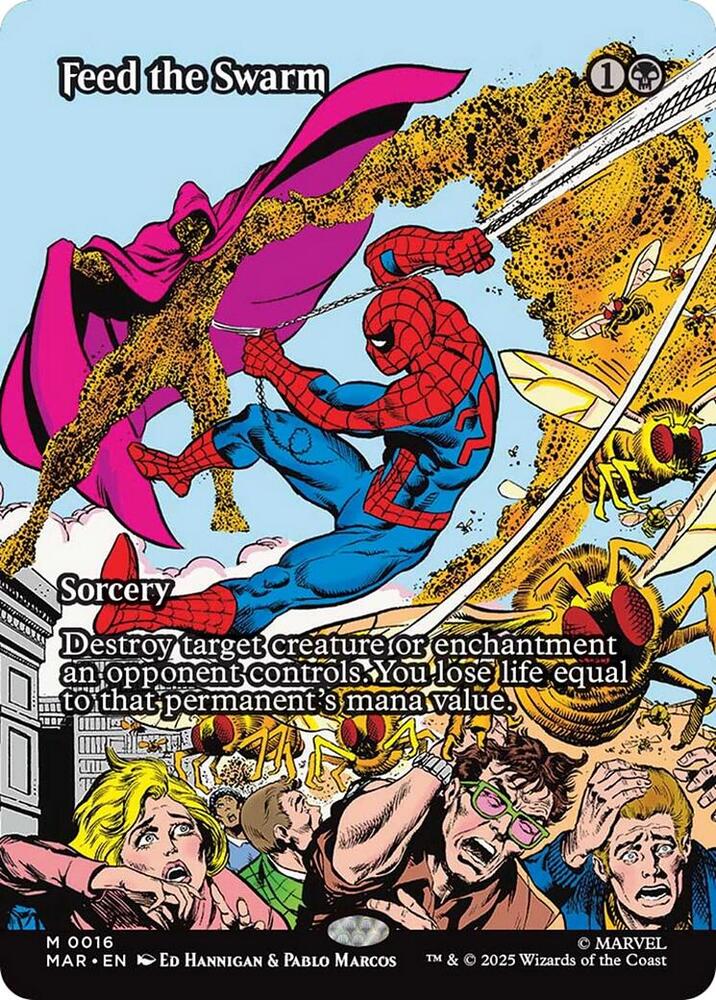
Black is very good at killing creatures.
Enchantments are another story.
That’s what makes Feed the Swarm so useful.
It can destroy either a creature or an enchantment an opponent controls. You lose life equal to that permanent’s mana value, but that’s usually a reasonable price for getting rid of something your deck might otherwise struggle to answer.
It’s especially valuable in mono-black, where your options for dealing with enchantments are much more limited.
Sometimes the most useful staple isn’t the most powerful card. It’s the card that solves a problem your color normally can’t.
Feed the Swarm does exactly that.
7. Toxic Deluge
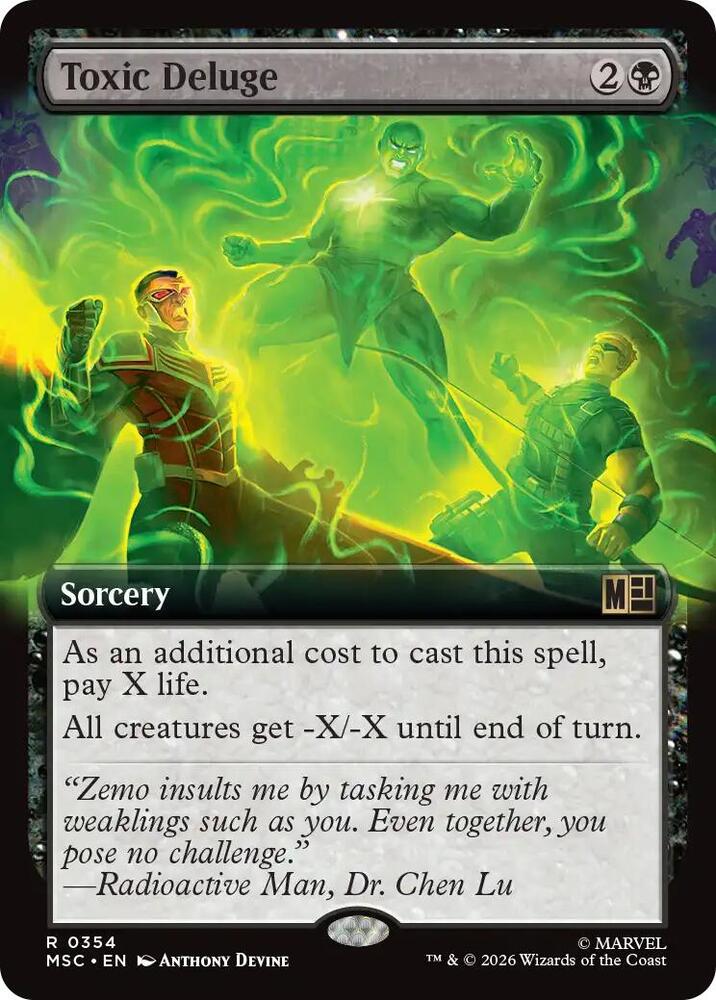
Eventually, somebody’s board is going to get out of hand.
Maybe it’s you. Hopefully it’s you.
But when it isn’t, Toxic Deluge can help reset things.
For three mana and X life, every creature gets -X/-X until end of turn.
The nice part is that you decide how much life you’re willing to spend. If the biggest problem on the battlefield has four toughness, you might only need to pay four life.
Giving creatures negative toughness also gets around indestructible, which can matter quite a bit when someone has built a board that’s otherwise difficult to clear.
You might lose your creatures too, but sometimes everybody needs to start over.
8. Reanimate
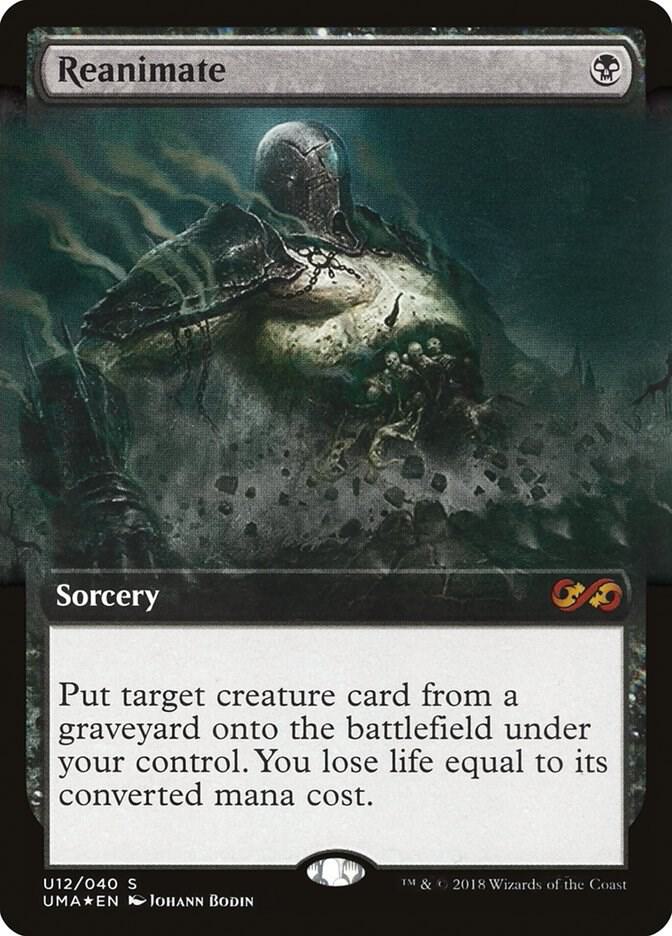
Why spend eight mana casting a giant creature when you could spend one?
Reanimate lets you put a creature from any graveyard onto the battlefield under your control. You lose life equal to its mana value, but black has never been particularly worried about paying life to get what it wants.
The obvious use is bringing back one of your own creatures.
But Reanimate doesn’t say it has to be your graveyard.
If an opponent happens to have something particularly nasty sitting in theirs, you’re welcome to borrow it.
Reanimate is obviously at its best in graveyard-focused decks, but even outside of dedicated reanimator strategies, getting an important creature back for one mana is hard to complain about.
9. Gray Merchant of Asphodel
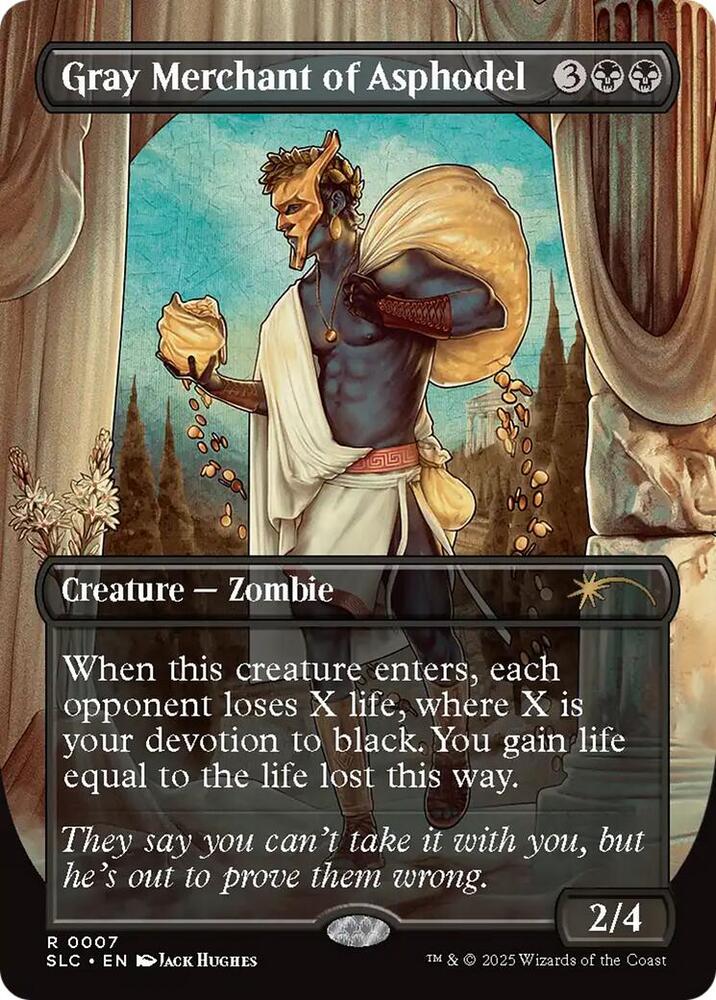
If you’ve played against mono-black Commander before, you’ve probably met Gray Merchant of Asphodel. Or Gary, as he’s usually called.
When Gary enters the battlefield, each opponent loses life equal to your devotion to black. You then gain life equal to the total amount of life lost this way.
In a four-player game, that can get out of hand very quickly.
If your devotion is seven, for example, each opponent loses seven life. That’s 21 life lost around the table and 21 life gained by you.
And that’s before somebody figures out how to bring Gary back and do it again.
The more heavily your deck leans into black permanents, the scarier he gets.
10. Bolas’s Citadel
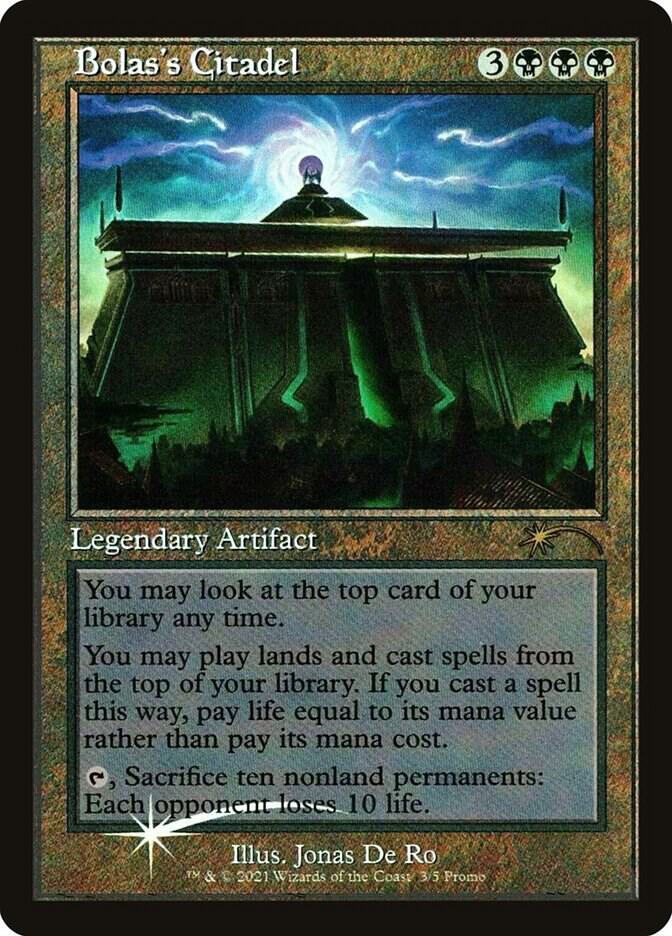
Bolas’s Citadel is one of those cards that can turn a normal turn into something ridiculous.
It lets you look at the top card of your library at any time, and you can cast spells from the top by paying life equal to their mana value instead of paying their mana costs.
Play a spell. Look at the next card. Pay some life. Play that one too.
If your deck has enough low-cost cards—or ways to manipulate the top of your library—you can start chaining spells together without spending much mana at all.
Then there’s the other ability.
You can tap the Citadel and sacrifice ten nonland permanents to make each opponent lose 10 life.
It’s expensive, it’s powerful, and it’s exactly the sort of card that makes spending life in black feel less like a downside and more like another resource.
What Does Your Deck Actually Need?
The fun thing about mono-black is that you have a lot of options. But don’t look at this list as ten cards you have to squeeze into every mono-black deck.
And if the solution costs you a little life? You’re playing black. You’ll probably be fine.



Leave a Reply